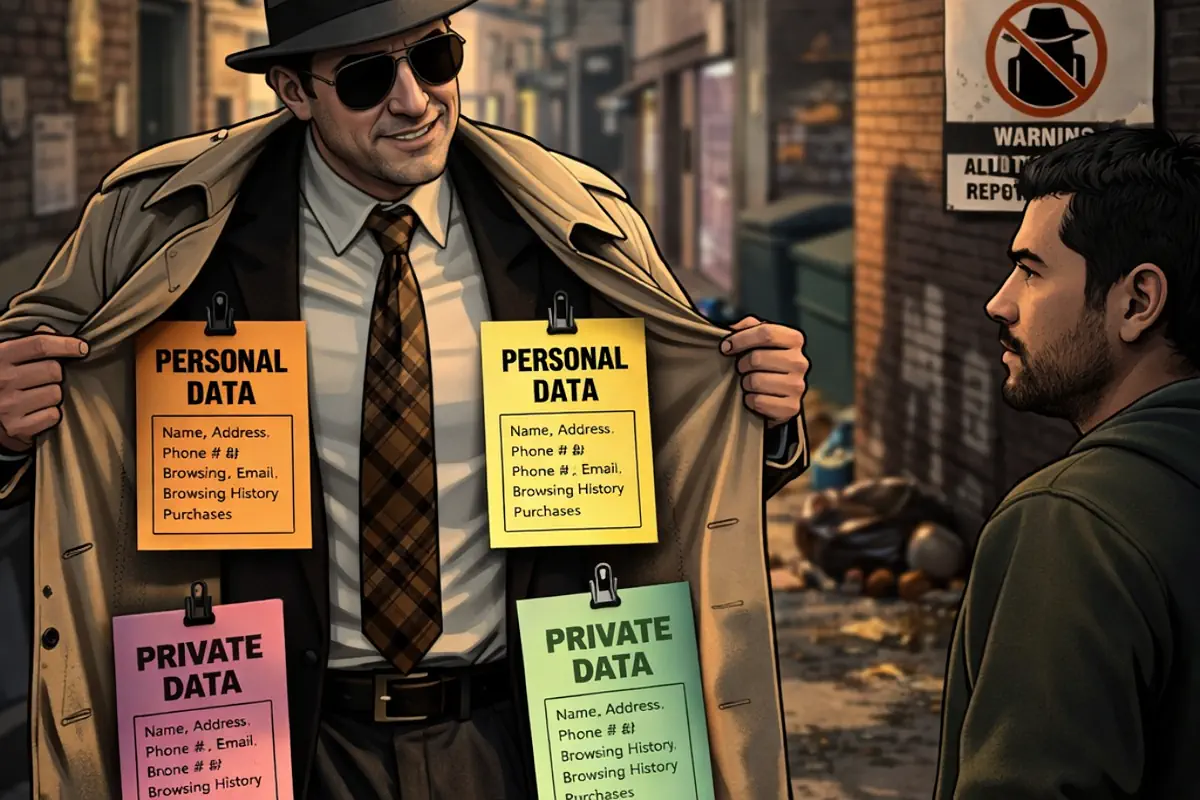
What “Selling Personal Data” Means in Law
In U.S. privacy law, “selling data” does not always mean a direct exchange of money.
Depending on the law, it may include:
- Sharing personal information with third parties
- Transferring data for advertising or marketing
- Providing access to data in exchange for business benefits
“Personal data” can include:
- Names and contact information
- Online identifiers (IP address, device IDs)
- Location data
- Purchase or browsing history
- Biometric identifiers in certain cases
Different laws define these terms differently. There is no single definition that applies nationwide.
No Single Federal Privacy Law
The United States does not currently have one comprehensive federal law that governs all personal data collection and sales across all industries.
Instead, privacy regulation is structured through:
- Federal laws that apply to specific sectors
- State laws that apply more broadly to consumers
- Federal enforcement authority through agencies like the Federal Trade Commission (FTC)
Because of this structure, whether selling data is legal depends on the situation.
Federal Laws That Limit Data Use

Certain categories of data are protected under federal law.
These laws do not ban all data sales, but they impose strict requirements.
Health Information
- Governed by HIPAA
- Applies to covered entities and business associates
- Limits how protected health information can be used or disclosed
Financial Information
- Governed by the Gramm-Leach-Bliley Act (GLBA)
- Requires financial institutions to explain data-sharing practices
- May require providing opt-out rights
Children’s Data
- Governed by COPPA
- Applies to children under age 13
- Requires notice and verifiable parental consent in covered situations
Each law applies only within its defined scope. Outside those areas, other rules may apply.
FTC Authority and Unfair Practices
The FTC enforces consumer protection laws related to privacy and data security.
Companies may face enforcement if they:
- Misrepresent how they use personal data
- Fail to follow their own privacy policies
- Engage in unfair or deceptive practices
This means that even if data sharing is allowed, it must be:
- Clearly disclosed
- Not misleading
- Consistent with public statements
State Privacy Laws Are Expanding
Many states have enacted comprehensive consumer privacy laws.
While these laws vary, they commonly provide rights such as:
- The right to know what data is collected
- The right to request deletion
- The right to correct inaccuracies
- The right to opt out of certain data sales or sharing
These laws generally apply to businesses that meet certain thresholds, such as revenue or data volume.
Not every business is covered in every state.
Illinois Law and Biometric Data
Illinois has specific protections for biometric information.
Biometric identifiers may include:
- Fingerprints
- Voiceprints
- Scans of face geometry
Under Illinois law, private entities must:
- Provide written notice before collection
- Explain the purpose of use
- Obtain a written release in applicable situations
Failure to follow these requirements can result in legal claims.
When Selling Data May Be Lawful
Selling or sharing personal data may be lawful when:
- The practice is clearly disclosed
- The company follows applicable federal and state laws
- Required notices are provided
- Required consumer rights are honored
However, legality depends on the specific facts and applicable law.
When It May Become Unlawful
Data practices may become unlawful if a company:
- Provides false or misleading disclosures
- Fails to follow its own privacy policy
- Ignores required consumer rights
- Mishandles protected categories of data
- Fails to implement reasonable data security
Regulators evaluate these situations case by case.
Consent Depends on the Law
There is no single universal consent standard in U.S. privacy law.
Instead:
- Some laws require affirmative consent
- Some require notice and opt-out options
- Some do not require consent for certain uses
The requirements depend on:
- The type of data
- The law that applies
- The role of the company handling the data
Data Brokers and Disclosure Requirements
Data brokers collect and share personal information from multiple sources.
Their activities may be lawful if they:
- Comply with applicable state laws
- Provide required disclosures
- Honor consumer rights where required
However, obligations vary by jurisdiction.
Your Right to Opt Out
Some state laws give consumers the right to opt out of certain data sales or sharing.
Where applicable, businesses must:
- Provide a clear method to submit requests
- Process requests within required timeframes
These rights are not identical across all states.
Online Terms and Privacy Policies
When using websites or apps, users often agree to privacy policies.
These policies must:
- Accurately describe data practices
- Not be deceptive
- Align with actual business practices
If a company states one thing but does another, that may trigger enforcement.
To better understand how legal rights apply in everyday disputes, see:
Understanding Your Legal Rights in Tenant-Landlord Disputes.
For official information on consumer privacy rights in Illinois, visit the Illinois Attorney General consumer protection page.
Can Businesses Sell Customer Data
Businesses may share or sell data only if they comply with applicable law.
This typically requires:
- Transparent privacy disclosures
- Compliance with federal and state requirements
- Procedures to respond to consumer requests
Businesses should not assume that general permission exists.
Each situation must be evaluated under the relevant law.
Key Risk Areas for Businesses
Common areas where legal issues arise include:
- Marketing databases
- Website tracking technologies
- Third-party data sharing agreements
- Customer account information
- Analytics and advertising tools
Risks increase when practices are not clearly documented or disclosed.
How This Affects Individuals
Consumers may be affected by data sharing in several ways:
- Increased targeted advertising
- Profiling based on behavior
- Exposure to data breaches or misuse
Understanding applicable rights can help reduce these risks.
Where Privacy Law Is Heading
Privacy regulation in the United States continues to evolve.
Recent trends include:
- Growth of state-level privacy laws
- Increased regulatory enforcement
- Expanded consumer rights
Future changes may further define how personal data can be used or shared.
How to Protect Your Personal Data
Even with evolving laws, individuals can take practical steps to reduce exposure.
Review Privacy Settings
- Check account settings on websites and apps
- Disable unnecessary data sharing features
- Limit location tracking where possible
Use Available Consumer Rights
- Submit opt-out requests where offered
- Request access to your personal data
- Ask for deletion when applicable
Limit Information You Provide
- Avoid sharing unnecessary personal details
- Use separate emails for sign-ups
- Be cautious with surveys and online forms
Monitor Financial and Online Activity
- Review bank and credit activity regularly
- Use alerts for unusual transactions
- Check credit reports periodically
Understand Before You Agree
- Read privacy notices when possible
- Be cautious with “free” services that rely on data use
Regulatory Enforcement and Penalties
Government agencies may take action when companies fail to follow privacy laws.
Potential consequences include:
- Investigations by regulatory authorities
- Civil penalties and fines
- Orders to change business practices
- Ongoing compliance monitoring
Enforcement typically focuses on:
- Misleading statements about data use
- Failure to honor consumer rights
- Inadequate data protection practices
Private Legal Claims
Some laws allow individuals to bring legal claims.
This depends on:
- The specific statute involved
- Whether a private right of action exists
- The nature of the alleged violation
Possible remedies may include:
- Monetary damages
- Court orders requiring compliance
- Settlement agreements
Not all privacy violations allow private lawsuits.
Common Misunderstandings
“Selling data is always illegal”
It is not automatically illegal. Legality depends on compliance with applicable laws.
“All companies need consent for every use”
Requirements vary depending on the law and type of data.
“Only large companies handle personal data”
Businesses of many sizes may collect and share data.
“Consumers have no control”
Many state laws provide rights, but availability depends on jurisdiction.
If You Believe Your Data Was Misused
Taking action early can help protect your rights.
Steps you can take
- Keep records of what occurred
- Save communications and screenshots
- Contact the company involved
- Submit complaints to appropriate agencies
- Seek legal guidance if needed
Why Data Privacy Matters Today
Personal data is widely used in modern business operations.
It supports:
- Advertising systems
- Product development
- Customer experience improvements
At the same time, misuse can create risks for individuals.
Balancing these interests is a central issue in current privacy law.
FAQ Section
Is it legal for companies to sell my personal data?
In some cases, yes. It depends on the type of data, applicable laws, and whether the company follows required disclosure and consumer rights rules.
Do I have the right to stop my data from being sold?
In certain states, consumers may have the right to opt out of specific types of data sales or sharing.
What type of data is more strictly regulated?
Health, financial, and biometric data are often subject to stricter legal requirements under specific laws.
Can I take legal action if my data is misused?
In some situations, yes. Certain laws allow individuals to bring claims if their rights are violated.
How can I find out if my data is being shared or sold?
You may review privacy policies, account settings, or submit formal requests where laws provide that right.
Legal Disclaimer
This article is provided for general informational purposes only and does not constitute legal advice. The information presented is based on publicly available legal frameworks, including federal and state consumer privacy laws, but may not reflect all recent legal developments or apply to every situation. Reading this content does not create an attorney–client relationship with Servicios Legales Abogados Chicago or any of its attorneys. Privacy and data protection laws vary by jurisdiction and depend heavily on specific facts and circumstances. You should not act or rely on this information without seeking advice from a qualified attorney licensed in your state. Laws and regulations may change, and their application can differ based on individual circumstances.
Leave a Reply