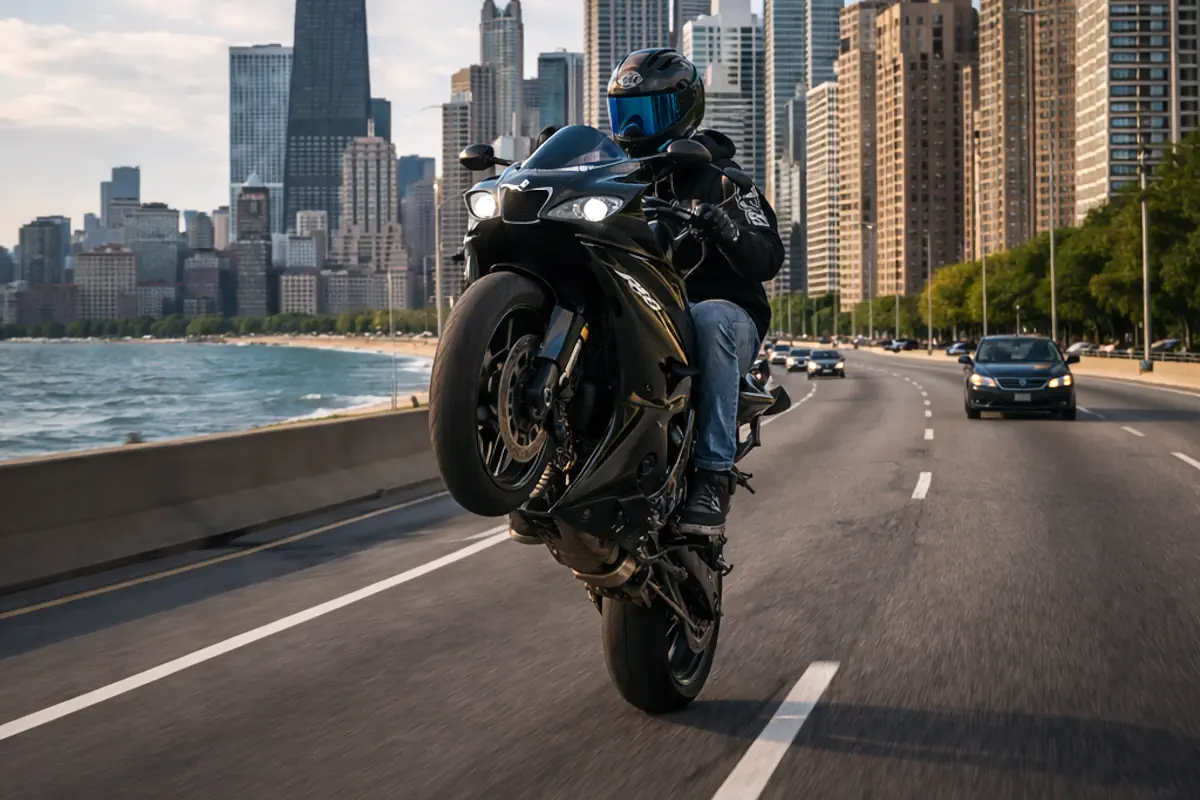
What Makes a Motorcycle Street Legal in Illinois
To ride a motorcycle legally on public roads in Illinois, your bike must meet specific legal requirements. These rules come from state vehicle laws and are enforced by local authorities in Chicago and across Illinois.
A motorcycle is considered “street legal” when it is properly equipped, registered, and operated by a licensed rider.
Basic Legal Requirements
To be street legal in Illinois, a motorcycle must have:
- A valid registration
- A visible license plate
- Proper insurance coverage
- A working headlight (visible from at least 500 feet)
- A functioning tail light and brake light
- Turn signals (for most modern motorcycles)
- At least one rearview mirror
- A working horn
- A proper exhaust system (not excessively loud)
If any of these are missing or not working, you can be ticketed or stopped by law enforcement.
Motorcycle Registration in Illinois
Before riding on public streets, your motorcycle must be registered with the state.
Registration Process
To register your motorcycle, you must:
- Provide proof of ownership (title)
- Complete registration paperwork
- Pay required state fees
- Obtain license plates
Illinois Secretary of State Motorcycle License Plates
Without registration, riding on public roads is illegal and can result in fines or impoundment.
Motorcycle License Requirements
You cannot legally ride a motorcycle in Illinois without the proper license.
Class M License
Illinois requires a Class M license for motorcycle operation.
There are two types:
- Class M (full license): Allows operation of any motorcycle
- Class L: Limited to smaller engine motorcycles
To obtain a license, you must:
- Pass a written test
- Pass a riding skills test
- Meet age requirements
- Possibly complete a safety course
Insurance Requirements
Illinois law requires all motorcycles to carry minimum liability insurance.
Minimum Coverage
You must have:
- Injury coverage per person
- Injury coverage per accident
- Property damage coverage
Failure to carry insurance can lead to:
- Fines
- License suspension
- Vehicle impoundment
Equipment Laws You Must Follow
Even if your bike is registered, it must meet safety equipment standards.
Required Equipment Details
Illinois law requires:
- Headlights: Must be on at all times when riding
- Brakes: Must function properly
- Mirrors: At least one, but two are recommended
- Tires: Must meet safety standards
- Muffler: Must prevent excessive noise
Noise Restrictions
Motorcycles cannot be excessively loud.
- Modified exhaust systems may violate noise laws
- Local Chicago ordinances may be stricter
Helmet Laws in Illinois
Illinois is one of the few states without a universal helmet law.
What the Law Says
- Helmets are not required for most riders
- Eye protection is required unless your bike has a windshield
Even though helmets are not required, they are strongly recommended for safety.
Riding Legally in Chicago Streets
Chicago enforces both state laws and local ordinances.
Key City Rules
When riding in Chicago:
- Follow all traffic signals and signs
- Do not lane split (illegal in Illinois)
- Obey speed limits strictly
- Avoid reckless driving behaviors
Police enforcement in Chicago can be strict, especially in high-traffic areas.
Converting a Dirt Bike to Street Legal
Many riders want to convert off-road bikes into street legal motorcycles.
What You Must Add
To make a dirt bike street legal, you must install:
- Headlight and tail light
- Turn signals
- Brake light switch
- Horn
- Mirror
- DOT-approved tires
You must also:
- Register the bike
- Obtain insurance
- Pass any required inspections
Common Legal Mistakes Riders Make

Many riders get into trouble because they overlook small details.
Frequent Issues
- Riding without proper license
- Expired registration
- No insurance coverage
- Loud aftermarket exhaust
- Missing lights or signals
These violations can lead to fines, points on your license, or worse.
Traffic Stops and Motorcycle Laws
If you are stopped by police while riding:
What to Expect
You may be asked for:
- Driver’s license (Class M)
- Registration
- Proof of insurance
If you cannot provide these, penalties can apply immediately.
Penalties for Non-Compliance
Breaking motorcycle laws in Illinois can lead to serious consequences.
Possible Penalties
- Traffic tickets and fines
- License suspension
- Motorcycle impoundment
- Increased insurance rates
Repeat violations can lead to more severe consequences.
Legal Help After a Motorcycle Violation
If you are cited or charged, understanding your rights matters.
You may need help with:
- Traffic violations
- License suspension issues
- Insurance disputes
Learn more about your rights in Traffic Violations and DUI in Chicago
Motorcycle Safety Courses and Legal Benefits
Taking a motorcycle safety course is not always required, but it can help you in several legal and practical ways.
Why Safety Courses Matter
A certified motorcycle safety course can:
- Help you pass licensing tests more easily
- Improve your riding skills
- Reduce your risk of accidents
- Potentially lower insurance premiums
In some cases, completing a course may allow you to waive parts of the licensing exam.
Illinois Motorcycle Safety Program
Special Rules for New Riders
New riders face stricter expectations, especially when applying for a motorcycle license.
Age-Based Rules
- Riders under 18 must complete an approved safety course
- Parental consent is required
- Additional supervision rules may apply
Learning Period Tips
During your early riding period:
- Avoid high-traffic areas
- Ride during daylight hours
- Practice in controlled environments
These steps are not just safer—they also help you avoid early violations.
Motorcycle Modifications and Legal Limits
Customizing your motorcycle is common, but not all modifications are legal for street use.
Legal vs Illegal Modifications
Allowed modifications typically include:
- Cosmetic changes
- Seat adjustments
- Paint and design changes
Potentially illegal modifications include:
- Removing required lights
- Installing non-compliant exhaust systems
- Altering emissions systems
- Removing mirrors or safety equipment
Always make sure modifications do not interfere with required safety features.
Lane Splitting and Traffic Behavior
Lane splitting is when a motorcycle rides between lanes of traffic.
Is Lane Splitting Legal in Illinois
- Lane splitting is illegal in Illinois
- Riders must stay within a single lane
- Violations can result in tickets and fines
Safe Riding Behavior
To stay compliant:
- Keep a safe following distance
- Avoid aggressive lane changes
- Use signals at all times
Parking Laws for Motorcycles in Chicago
Parking rules can vary depending on the area.
Where You Can Park
Motorcycles may:
- Park in designated spaces
- Use standard parking spots (paying meter if required)
Where You Cannot Park
- Sidewalks (generally prohibited)
- Restricted zones
- Handicap spaces without authorization
Local enforcement in Chicago is strict, especially in busy areas.
What Happens After a Motorcycle Accident
If you are involved in an accident, legal responsibilities apply immediately.
Required Actions
You must:
- Stop at the scene
- Exchange information
- Report the accident if required
- Cooperate with law enforcement
Legal Risks After an Accident
You may face:
- Traffic citations
- Liability claims
- Insurance disputes
Understanding your rights early can make a difference.
When Legal Guidance Becomes Important
Motorcycle laws can become complicated quickly, especially after a violation or accident.
Situations Where Legal Help May Be Needed
- License suspension issues
- Serious traffic violations
- Injury claims
- Disputes with insurance companies
Getting clear legal guidance can help you avoid long-term consequences.
Frequently Asked Questions
Do I need a special license to ride a motorcycle in Illinois?
Yes. You must have a Class M motorcycle license or permit to legally operate a motorcycle.
Can I ride a dirt bike on the street in Chicago?
Only if it has been fully converted to meet street-legal requirements and is registered and insured.
Are helmets required in Illinois?
No. Illinois does not require helmets for most riders, but eye protection is required without a windshield.
Is lane splitting allowed in Illinois?
No. Lane splitting is illegal and can result in a ticket.
What happens if I ride without insurance?
You may face fines, license suspension, and possible impoundment of your motorcycle.
Do motorcycles need inspections in Illinois?
Generally, motorcycles are not subject to routine emissions testing, but they must meet equipment standards.
Legal Disclaimer
This content is provided for general informational purposes only. It is not legal advice and should not be relied upon as such. Reading this article does not create an attorney–client relationship with Servicios Legales Abogados Chicago or any of its attorneys. Laws and regulations, including motorcycle and traffic laws, can change over time and may vary based on specific facts and circumstances. Legal outcomes depend on the details of each individual case. You should consult a qualified attorney for advice regarding your specific situation. Additionally, areas of law such as immigration law are highly fact-specific and subject to frequent changes, which may impact related legal matters.
Need Help With Motorcycle Laws?
If you have questions about motorcycle laws, traffic violations, or your legal rights after a stop or accident, Servicios Legales Abogados Chicago is here to help. Contact our team today to better understand your options and protect your rights.