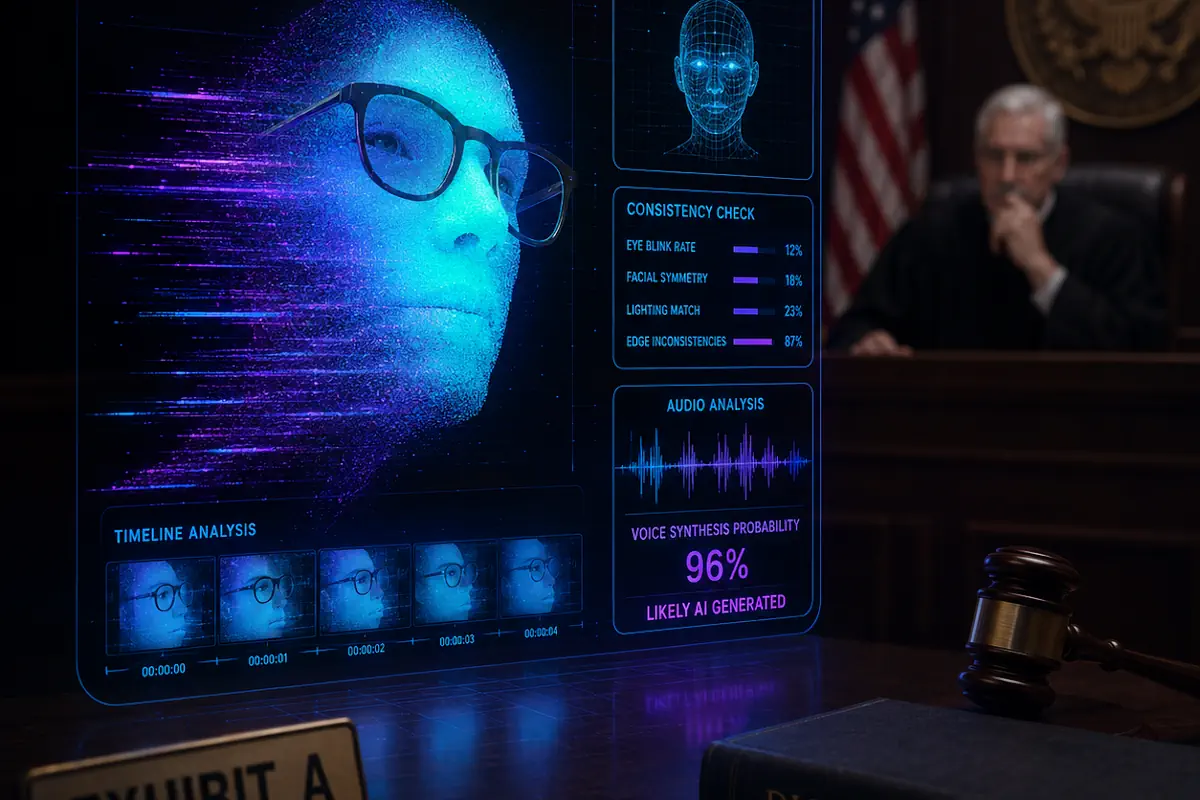
Desastre Deepfake: Cuando Los Videos Falsos Se Convierten En Evidencia Real
The Rise of AI Deepfakes
Artificial intelligence has changed the internet faster than many laws can keep up. One of the biggest concerns today is the rise of deepfakes. These are fake videos, fake images, or fake audio recordings created using AI tools that can imitate real people with surprising accuracy.
A deepfake can make someone appear to say words they never said. It can make a person appear in a fake video they never participated in. Some AI systems can even recreate a person’s voice after hearing only a short audio sample.
Years ago, fake videos were easy to detect. Today, many are becoming harder to identify. Some deepfakes are realistic enough to confuse employers, family members, banks, law enforcement, and even juries.
The legal system is now facing difficult questions:
- Can AI-generated videos be used as evidence?
- How can courts determine whether a recording is real?
- What happens if someone uses AI impersonation to commit fraud?
- Can victims sue over fake content?
- Are deepfake scams criminal offenses?
- What rights do victims have when fake videos spread online?
These issues are becoming more common across the United States.
AI Deepfake Law
AI deepfake law is still developing. There is currently no single nationwide law that completely regulates deepfakes in every situation. Instead, different laws may apply depending on the facts of the case.
Deepfakes may trigger legal issues involving:
- Fraud
- Defamation
- Harassment
- Identity theft
- Consumer protection
- Election interference
- Privacy rights
- Intellectual property
- Cybercrime
- False advertising
- Financial scams
- Extortion
Some states have passed laws that target specific deepfake conduct. Other cases rely on older laws that were originally written before AI technology existed.
Courts are now trying to apply traditional legal principles to modern AI-generated content.
That process is not always simple.
Fake Video Evidence
One of the biggest courtroom concerns involves fake video evidence.
For decades, video recordings were considered powerful evidence. Many people believed that “video does not lie.” AI technology is changing that belief.
Now, attorneys, judges, investigators, and juries must consider whether digital evidence may have been altered or entirely fabricated.
Potentially manipulated evidence may include:
- Security footage
- Cell phone recordings
- Video calls
- Voice messages
- Surveillance videos
- Social media clips
- Police body camera footage
- Audio interviews
- Online livestream recordings
This creates serious legal challenges.
A fake recording could damage someone’s reputation, affect a criminal case, or influence a civil lawsuit.
In some situations, fake content may lead to:
- Wrongful arrests
- Employment termination
- Immigration problems
- Financial losses
- Family disputes
- Reputation damage
- Business losses
Digital evidence now requires closer examination than ever before.
Courtroom Authentication Problems
Courts generally require evidence to be authenticated before it can be admitted. This means a party must show that the evidence is genuine.
With AI-generated content, authentication becomes much harder.
Attorneys may challenge:
- Whether the recording was edited
- Whether AI software altered the voice
- Whether facial movements were digitally changed
- Whether timestamps were manipulated
- Whether the source file is original
- Whether metadata was modified
Modern litigation increasingly involves digital forensic experts.
These experts may examine:
- Metadata
- Compression artifacts
- Editing inconsistencies
- Frame irregularities
- AI generation markers
- Audio distortions
- Source device information
However, even experts may disagree.
As AI technology improves, detecting deepfakes becomes more difficult.
Fake Audio Recordings

Deepfake concerns are not limited to videos. AI-generated audio recordings are also creating major legal problems.
AI systems can imitate voices with alarming realism.
Scammers may clone a voice using:
- Social media videos
- Public interviews
- Podcasts
- Voicemail greetings
- TikTok clips
- YouTube videos
Once enough audio is collected, AI software may create fake conversations that sound authentic.
Victims may face:
- Fake ransom calls
- Fraudulent bank requests
- Business scams
- False confessions
- Fake threats
- Impersonation of family members
Businesses are increasingly warning employees about voice-cloning scams.
Some fraud schemes involve criminals pretending to be:
- CEOs
- Attorneys
- Government officials
- Parents
- Children
- Bank representatives
- Immigration officers
These scams can cause enormous financial damage.
Identity Fraud and AI Impersonation
Identity fraud is becoming more sophisticated because of AI impersonation technology.
Traditional identity theft usually involved stolen documents or account numbers. Deepfake technology now allows criminals to imitate entire identities.
Fraudsters may use AI-generated content to:
- Open accounts
- Access financial records
- Trick customers
- Obtain loans
- Bypass identity verification systems
- Impersonate executives
- Commit romance scams
- Manipulate businesses
Some AI systems can generate fake live video feeds during identity verification checks.
This creates major risks for:
- Banks
- Employers
- Insurance companies
- Government agencies
- Online payment systems
Victims often discover the fraud only after serious financial damage has already occurred.
Revenge Deepfakes
One of the most disturbing uses of AI technology involves revenge deepfakes.
These situations often involve fake intimate images or videos created without consent.
Victims may experience:
- Emotional distress
- Public humiliation
- Workplace problems
- Relationship damage
- Online harassment
- Threats
- Blackmail
- Mental health impacts
Some victims discover fake content posted on:
- Adult websites
- Social media platforms
- Messaging apps
- Anonymous forums
- Fake profiles
Even when the content is fake, the damage can be very real.
Removing deepfake revenge content can be difficult because files may spread quickly across multiple websites and jurisdictions.
Privacy Rights and Consent
Deepfake disputes often involve questions about privacy rights and consent.
Important legal issues may include:
- Whether a person consented to the use of their likeness
- Whether the content falsely portrays real conduct
- Whether the fake content caused measurable harm
- Whether the publication violated privacy laws
- Whether the creator intended to deceive others
Consent matters heavily in many digital privacy disputes.
A person may have legal concerns if their:
- Face
- Voice
- Identity
- Personal photos
- Online content
- Professional image
were used without authorization.
These cases can become highly fact-specific.
Deepfake Scams Targeting Businesses
Businesses are becoming major targets for deepfake scams.
Criminals may use AI impersonation to trick employees into transferring money or revealing confidential information.
Some schemes involve fake emergency requests from executives.
Employees may receive:
- Fake Zoom calls
- AI-generated voice calls
- Fake video meetings
- Fraudulent payment instructions
- Fake legal demands
In some reported incidents, companies lost large amounts of money after employees believed they were communicating with real executives.
Businesses now face pressure to strengthen cybersecurity procedures.
Recommended safeguards may include:
- Multi-step verification
- Secondary approvals
- Internal security training
- Voice verification protocols
- Fraud awareness education
- Restricted payment authorization systems
Companies that fail to implement reasonable safeguards may face additional legal exposure after major fraud losses.
Social Media and Fake Content
Social media platforms have become major distribution channels for deepfake content.
AI-generated videos can spread rapidly through:
- TikTok
- X
- YouTube
- Messaging apps
- Online forums
A fake video may reach millions of viewers within hours.
Even when a platform later removes the content, the reputational harm may already be severe.
Some fake videos are designed to:
- Influence public opinion
- Damage reputations
- Manipulate elections
- Target businesses
- Harass individuals
- Create panic
- Spread misinformation
Platforms continue facing pressure to improve content moderation systems.
However, moderation remains difficult because AI-generated content is becoming increasingly realistic.
Criminal Investigations and Deepfakes
Law enforcement agencies are also dealing with growing deepfake concerns.
Investigators may encounter:
- Fabricated evidence
- Fake confessions
- Edited surveillance footage
- False witness recordings
- Altered digital communications
This creates serious evidentiary problems.
Investigators must determine:
- Whether evidence is authentic
- Whether AI manipulation occurred
- Whether a suspect intentionally created fake content
- Whether fraud or extortion laws apply
Digital forensic analysis is becoming increasingly important in modern criminal investigations.
Immigration Concerns and Digital Fraud
Immigration-related fraud may also involve AI impersonation and fake digital evidence.
False recordings or manipulated communications could potentially affect:
- Visa applications
- Immigration interviews
- Relationship evidence
- Employment verification
- Identity verification processes
Digital fraud allegations may create serious immigration consequences in some situations.
Because immigration law is highly fact-specific, individuals facing accusations involving fake digital evidence should take such situations seriously.
Artificial Intelligence | Federal Trade Commission
Employment Disputes and Fake Recordings
Employees and employers are increasingly facing disputes involving fake recordings.
Examples may include:
- Fake HR complaints
- Altered workplace recordings
- AI-generated harassment evidence
- False executive instructions
- Fabricated employee statements
Employment investigations now require more careful digital review procedures.
In some situations, workers may claim:
- Wrongful termination
- Defamation
- Retaliation
- Workplace harassment
- Privacy violations
Digital evidence disputes can quickly become complicated.
Defamation and Reputation Damage
Deepfakes can create severe reputational harm.
A fake video may falsely portray someone engaging in:
- Criminal conduct
- Offensive behavior
- Fraud
- Violence
- Harassment
- Illegal activity
Even if the video is eventually proven fake, reputational damage may continue long afterward.
Defamation disputes involving AI-generated content are becoming more common.
Important issues may include:
- Whether the content was presented as factual
- Whether viewers believed it was real
- Whether the victim suffered damages
- Whether the publisher acted negligently
- Whether the creator acted with malicious intent
Online reputation damage can affect:
- Employment opportunities
- Business relationships
- Professional licensing
- Personal relationships
- Financial opportunities
Evidence Preservation
When fake digital content appears online, preserving evidence may become extremely important.
Victims may want to preserve:
- Screenshots
- URLs
- Usernames
- Upload dates
- Messages
- Emails
- Metadata
- Account information
Deleting evidence too quickly may create additional problems later.
Digital evidence preservation is often time-sensitive because online content can disappear quickly.
Potential evidence sources may include:
- Social media accounts
- Cloud storage
- Text messages
- Video hosting platforms
- Online forums
- Financial records
Victims of AI impersonation scams may also face serious financial losses connected to identity theft, fake account activity, and unauthorized use of personal information. Learn more about consumer rights and how digital impersonation schemes may affect legal rights and financial security.
AI Detection Technology
Technology companies are racing to improve AI detection systems.
Some tools attempt to identify:
- Artificial facial movements
- Lip-sync inconsistencies
- Audio generation patterns
- Synthetic speech markers
- Video editing artifacts
However, the technology race continues on both sides.
As detection systems improve, deepfake creation systems also improve.
This creates ongoing challenges for courts, businesses, and investigators.
Financial Fraud Cases
Financial fraud involving AI impersonation is increasing worldwide.
Common schemes may involve:
- Fake investment opportunities
- Impersonated bank employees
- AI-generated customer service calls
- Cryptocurrency fraud
- Loan scams
- Wire transfer fraud
Victims sometimes transfer money because they believe the communication is legitimate.
AI-generated urgency often makes the scams more convincing.
Some scammers create fake videos of public figures or business leaders promoting fraudulent investments.
These schemes may target vulnerable individuals, older adults, or inexperienced investors.
Election Concerns and Public Trust
Deepfake technology has also raised concerns involving elections and public trust.
Fake political recordings may spread quickly online before voters have time to verify authenticity.
Potential election-related deepfake issues may include:
- Fake candidate speeches
- False campaign statements
- Manipulated interviews
- Fabricated scandals
- AI-generated robocalls
- False public endorsements
These situations may create legal disputes involving:
- Election laws
- Defamation claims
- Consumer deception
- Fraud allegations
- Campaign regulations
Public trust in digital media is increasingly being challenged.
Courts, lawmakers, and election officials continue debating how to address these risks while balancing constitutional protections involving speech and expression.
Minors and Deepfake Harm
Deepfake abuse involving minors raises especially serious concerns.
Cases involving children may involve:
- Fake explicit content
- Online exploitation
- Cyberbullying
- Harassment
- Extortion
- Identity misuse
These matters can involve both civil and criminal legal issues.
Parents may face difficult challenges trying to remove harmful content from the internet after it spreads across multiple platforms.
In many situations, preserving evidence and reporting misconduct quickly may become extremely important.
Intellectual Property Issues
AI-generated content may also create intellectual property disputes.
Legal issues may involve:
- Unauthorized use of a person’s likeness
- Voice imitation
- Trademark confusion
- Copyright disputes
- Commercial exploitation
- False endorsements
Businesses, entertainers, influencers, and public figures may all face risks involving unauthorized AI-generated content.
For example, an AI-generated advertisement could falsely imply that a celebrity or business endorsed a product.
This may create potential legal exposure for both creators and distributors of the content.
Digital Evidence in Civil Cases
Civil lawsuits increasingly involve digital evidence.
That evidence may include:
- Emails
- Videos
- Audio recordings
- Social media posts
- Security footage
- Messaging app conversations
As deepfake technology becomes more common, parties in civil litigation may challenge the authenticity of digital records more aggressively.
Attorneys may request:
- Device inspections
- Metadata analysis
- Forensic examinations
- Chain-of-custody documentation
- Platform account records
Evidence disputes may significantly increase litigation costs and complexity.
Insurance and Deepfake Fraud
Insurance companies are also monitoring AI-related fraud risks.
Potential schemes may involve:
- Fake accident videos
- False injury evidence
- Fabricated property damage
- AI-generated witness statements
- Manipulated claims documentation
Fraud investigations may now involve advanced digital forensic review procedures.
Insurers may increasingly scrutinize digital submissions that appear suspicious or inconsistent.
Consumer Protection Concerns
Consumer protection agencies continue warning the public about AI-related scams.
Consumers may encounter:
- Fake customer service agents
- AI-generated product endorsements
- Deepfake celebrity promotions
- Fraudulent investment platforms
- Fake emergency requests
- Identity verification scams
Warning signs may include:
- Urgent payment demands
- Requests for wire transfers
- Cryptocurrency payment requests
- Unusual voice or video behavior
- Inconsistent communication details
- Pressure tactics
Consumers should remain cautious when receiving unexpected digital communications involving money or sensitive information.
Senior U.S. Officials Impersonated in Malicious Messaging Campaign — FBI
Cybersecurity and Corporate Liability
Businesses may face legal exposure if they fail to address foreseeable cybersecurity risks involving AI impersonation.
Corporate responsibilities may include:
- Employee training
- Internal fraud prevention
- Secure communication systems
- Access controls
- Verification procedures
- Incident response planning
After major incidents, lawsuits may focus on whether a company acted reasonably under the circumstances.
Some disputes may involve allegations that:
- Security systems were inadequate
- Employees lacked proper training
- Fraud prevention procedures failed
- Sensitive information was improperly protected
As AI scams evolve, cybersecurity planning is becoming increasingly important for businesses of all sizes.
Law Enforcement Training
Law enforcement agencies are adapting training procedures to address modern digital evidence risks.
Investigators increasingly need training involving:
- AI-generated content detection
- Digital evidence preservation
- Metadata analysis
- Cybercrime investigations
- Online fraud schemes
- Social media evidence review
The growing complexity of AI-generated evidence may require greater reliance on technical specialists and forensic analysts.
Deepfakes and Family Law Disputes
Family law disputes may also involve fake recordings or manipulated evidence.
Potential allegations may involve:
- Fake threatening messages
- Altered recordings
- Fabricated communications
- Manipulated social media posts
These issues may affect disputes involving:
- Divorce
- Child custody
- Protective orders
- Domestic conflict allegations
Courts may require closer examination of disputed digital evidence before making important legal decisions.
Online Platforms and Content Removal
Victims of fake content often struggle to remove harmful material from the internet.
Challenges may include:
- Anonymous uploaders
- Overseas websites
- Reposted content
- Platform delays
- Jurisdiction issues
- Limited moderation resources
Even after removal requests are submitted, copies of the material may continue circulating online.
Victims may spend significant time attempting to limit further distribution.
The Importance of Documentation
People who believe they are victims of AI impersonation or fake digital evidence may benefit from documenting events carefully.
Documentation may include:
- Dates and times
- Screenshots
- Website addresses
- User account information
- Communications
- Financial records
- Witness information
Accurate documentation may become important during:
- Internal investigations
- Civil lawsuits
- Criminal investigations
- Insurance claims
- Employment disputes
Digital evidence often changes quickly, making timely preservation important.
AI Deepfakes and Public Awareness
Public awareness about deepfake risks continues growing.
Many people still assume:
- Videos are automatically authentic
- Audio recordings cannot be fabricated
- Video calls prove identity
- Voice messages are reliable evidence
Modern AI technology is challenging these assumptions.
Education and awareness are becoming important tools in reducing fraud and misinformation risks.
Individuals and businesses increasingly need to verify information through multiple independent sources.
Courts and Future Legal Challenges
Courts will likely continue facing difficult questions involving AI-generated evidence.
Future disputes may involve:
- Authentication standards
- Digital forensic procedures
- Privacy rights
- Consent standards
- Platform liability
- Fraud prevention
- Constitutional issues
- International enforcement challenges
Technology is evolving rapidly, while legal systems often move more slowly.
This gap may continue creating uncertainty in many areas of law.
Protecting Yourself From Deepfake Scams
Individuals can take steps to reduce the risk of becoming victims of AI impersonation scams.
Practical precautions may include:
- Verifying unusual requests independently
- Avoiding rushed financial decisions
- Using multi-factor authentication
- Protecting personal recordings online
- Monitoring financial accounts
- Confirming identity through secondary methods
- Remaining cautious with unexpected communications
Businesses may also benefit from:
- Employee cybersecurity training
- Internal verification policies
- Secure communication systems
- Fraud response procedures
Awareness remains one of the strongest protections against modern fraud schemes.
FAQ
What is a deepfake?
A deepfake is AI-generated content that imitates a real person’s appearance, voice, or actions. Deepfakes may include fake videos, fake audio recordings, or manipulated images.
Can fake videos be used as courtroom evidence?
Courts may examine whether digital evidence is authentic before admitting it. Fake or manipulated videos may be challenged during litigation or criminal investigations.
Is AI impersonation illegal?
AI impersonation may violate different laws depending on the situation. Possible legal issues may involve fraud, identity theft, harassment, defamation, or financial crimes.
What should I do if someone creates a fake video of me?
People facing harmful fake content may want to preserve evidence, document the situation carefully, and seek legal guidance based on the facts involved.
Are fake audio recordings becoming more common?
Yes. AI-generated voice cloning technology has become more advanced and is increasingly being used in scams, fraud schemes, and impersonation attempts.
Can businesses become victims of deepfake scams?
Yes. Businesses may face scams involving fake executive calls, AI-generated meetings, fraudulent payment requests, and impersonation schemes.
How do investigators detect deepfakes?
Digital forensic specialists may examine metadata, editing patterns, audio inconsistencies, compression artifacts, and other technical indicators when reviewing suspicious content.
Can deepfakes affect immigration cases?
Potentially yes. Fake recordings, false digital evidence, or identity fraud allegations may create serious concerns in immigration-related matters.
LEGAL DISCLAIMER
THIS ARTICLE IS PROVIDED FOR GENERAL INFORMATIONAL PURPOSES ONLY AND MAY NOT REFLECT THE MOST CURRENT LEGAL DEVELOPMENTS, COURT DECISIONS, REGULATIONS, OR INVESTIGATIVE STANDARDS. THE INFORMATION IN THIS ARTICLE IS NOT LEGAL ADVICE AND SHOULD NOT BE RELIED UPON AS LEGAL GUIDANCE FOR ANY SPECIFIC SITUATION.
READING THIS ARTICLE DOES NOT CREATE AN ATTORNEY–CLIENT RELATIONSHIP WITH SERVICIOS LEGALES ABOGADOS CHICAGO OR WITH ANY ATTORNEY ASSOCIATED WITH THE FIRM.
AI deepfake law, digital evidence disputes, identity fraud allegations, privacy rights, and immigration-related legal issues are highly fact-specific and may vary depending on jurisdiction, technology involved, platform policies, evidentiary standards, and changing laws.
SERVICIOS LEGALES ABOGADOS CHICAGO MAKES NO GUARANTEES ABOUT THE ACCURACY, COMPLETENESS, OR CURRENT VALIDITY OF THE INFORMATION PROVIDED. WE ARE NOT RESPONSIBLE FOR INACCURACIES, OUTDATED INFORMATION, OMISSIONS, THIRD-PARTY CONTENT, OR CHANGES IN LAWS, REGULATIONS, OR COURT PROCEDURES THAT MAY OCCUR AFTER PUBLICATION.
INDIVIDUALS FACING POSSIBLE LEGAL ISSUES INVOLVING AI impersonation, fake video evidence, identity fraud, cybercrime allegations, privacy violations, immigration consequences, or digital evidence disputes should seek qualified legal guidance regarding their specific circumstances.